Profile of Environmental Impacts
HKEX KPI A3.1
Profile of Environmental Impacts
HKEX KPI A3.1
Carbon Emissions
GRI 305
HKEX KPI A1.2, A1.5
HKEX KPI A1.2, A1.5
In 2025, our total carbon emissions decreased by 20% compared to 2024. The carbon intensity of our Hong Kong portfolio, Chinese Mainland portfolio and hotels decreased compared to 2024.
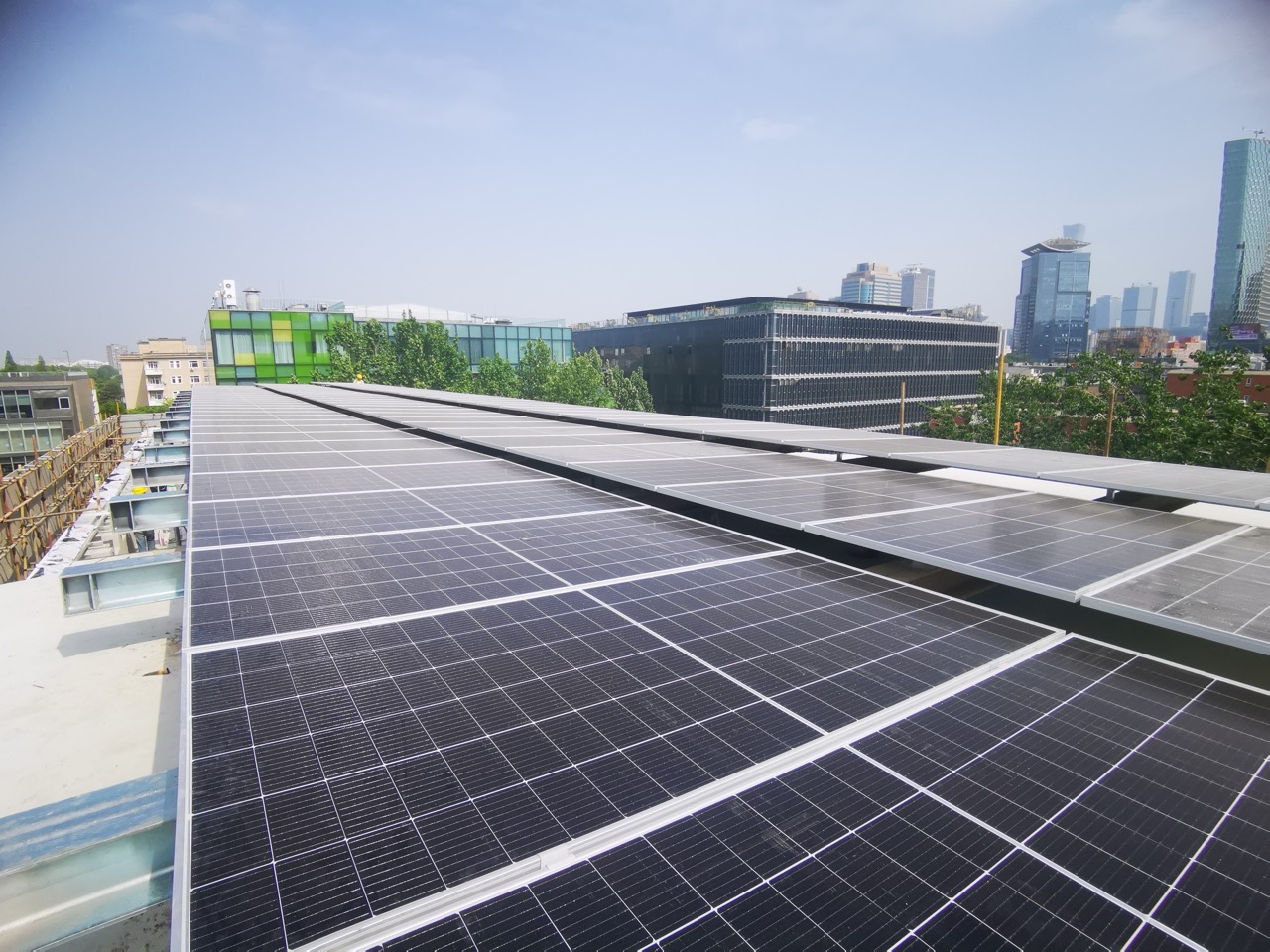
The Company’s largest source of carbon emissions under our control is Scope 2 emissions arising from purchased electricity. This category of emissions decreased by 21% compared to 2024. This is attributed to various factors, including the expansion of innovative low-carbon technologies such as the PEDF power distribution system at Taikoo Li Chengdu. We continued retrofitting works, improved energy management practices across our portfolios and increased our procurement of renewable electricity at HKRI Taikoo Hui and Taikoo Li Qiantan, securing 80% off-site renewable electricity covering both landlord and tenant operations starting in Q2 and Q3 of 2025 respectively. To date, 88% of the electricity consumption of our Chinese Mainland portfolio is now powered by renewable electricity, achieving net-zero emissions for both landlord and tenant operations.
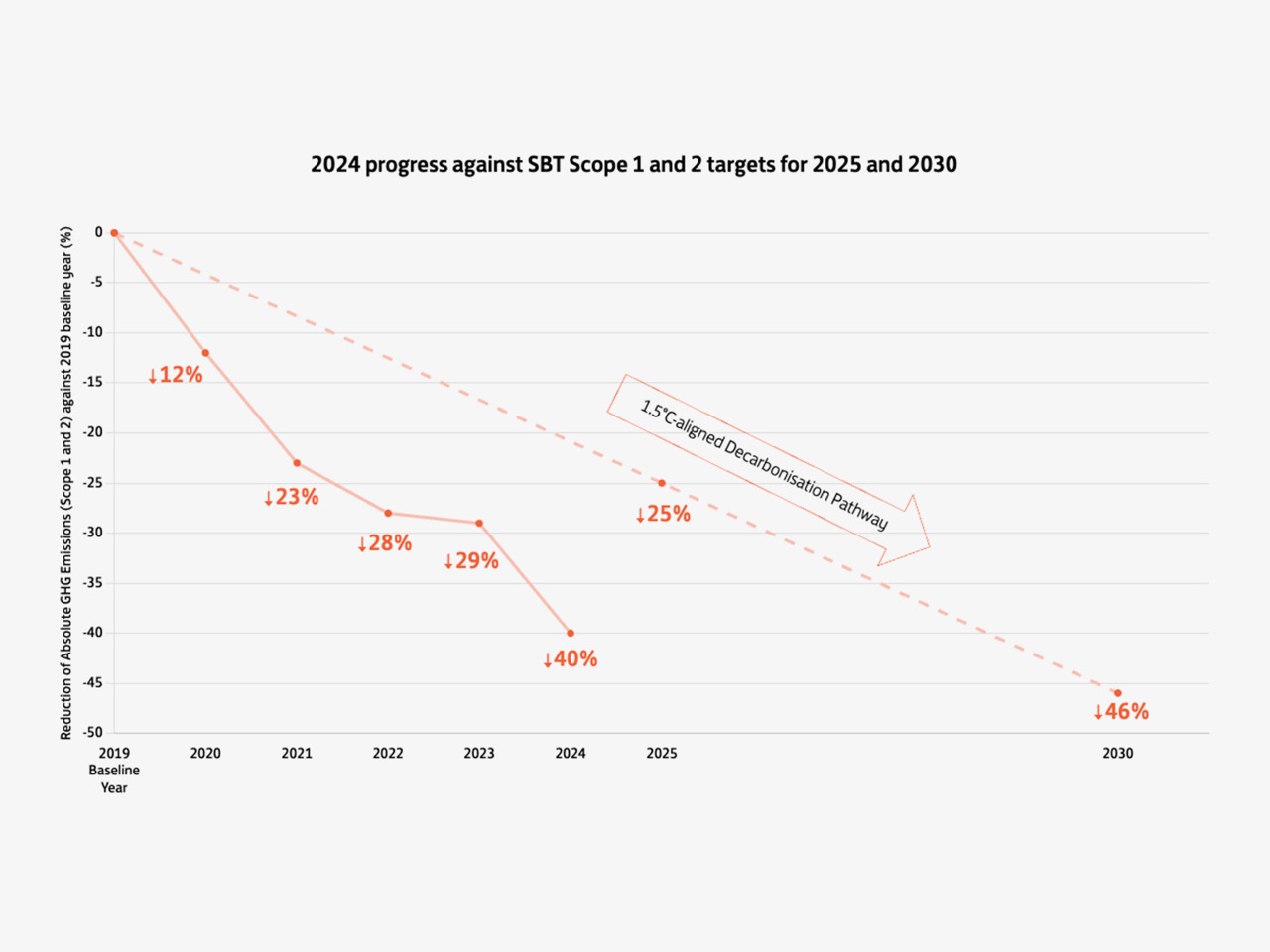
For further information about progress against our SBTs and efforts to reduce our carbon emissions, please click here.
Carbon Emissions – Scope 3
Swire Properties is conscious of our direct and indirect emissions at various stages along the value chain. Besides measuring Scope 1 (direct carbon emissions from energy combustion on-site) and Scope 2 carbon emissions (indirect carbon emissions which mainly come from the purchase and use of electricity), we also conduct comprehensive reviews of our Scope 3 emissions (indirect emissions that occur along the value chain) to understand the sources of our emissions and identify the associated material categories for management and reporting.
Scope 3 Emissions by Category
To address our Scope 3 emissions, we have established SBTs to reduce the emissions generated by capital goods and downstream leased assets by 25% and 28% per square metre respectively by 203039.
Category 1 emissions contributed to 55% of our Scope 3 emissions in 2025, reflective of the Company’s progress in procurement of goods and services to support its HKD100 billion investment plan. Swire Properties’ Business Partner Sustainability Programme is a key initiative that allows us to better manage our Category 1 emissions and effectively improve the data transparency, accuracy and reliability of the Scope 3 emissions generated from our supply chain. Through our tiered engagements approach – including an ESG risk screening, a supplier self-assessment questionnaire, and a detailed validated ESG assessment for high-risk suppliers – the Company is able to evaluate suppliers based on their industry and country, and request for carbon management and emissions information where risks are high.
We have introduced low-carbon specifications for new developments as part of our sustainable procurement strategy, detailing such specifications for concrete, rebar and structural steel. We also provide sustainable procurement guidelines to our procurement team in Hong Kong and the Chinese Mainland for non-key materials and services such as office equipment and catering. This empowers them to consider environmental performance during the procurement of goods and services.
Our Category 13 absolute emissions decreased by 20% from 2024, reflecting the success of our tenant engagement efforts in various SD initiatives, and the increase in off-site renewable electricity purchases for our tenant operations at HKRI Taikoo Hui and Taikoo Li Qiantan, securing 80% off-site renewable electricity covering both landlord and tenant operations starting in Q2 and Q3 of 2025 respectively. To date, 88% of the electricity consumption of our Chinese Mainland portfolio is now powered by renewable electricity, achieving net-zero emissions for both landlord and tenant operations.
We report on our Category 2 emissions associated with the upfront embodied carbon emissions from our new development projects upon construction completion. Taikoo Place Beijing and Taikoo Li Sanya are scheduled for phased completion in 2026.
Our emissions data have been included in our Sustainability Report since 2020 – please refer to the Performance Data Summary of this report for further details. While Swire Properties has limited influence or control over some of our Scope 3 emissions categories, we continuously monitor these emissions and seek opportunities to influence them in a positive direction, particularly if they begin to represent an increasing portion of our total carbon footprint.
Electricity Use Intensity
GRI 302
HKEX KPI A2.1
HKEX KPI A2.1
In 2025, our electricity use intensity40 decreased by 44%, from 194 kilowatt hours per square metre (“kWh/m2”) per year to 108 kWh/m2 per year across our global portfolios compared to our 2008 baseline year.
The electricity use intensity in our Hong Kong portfolio (including hotels) decreased by 22% compared to our 2019 baseline year. The electricity use intensity in our Chinese Mainland portfolio (including hotels) decreased by 12% as compared to our 2019 baseline year.
Electricity consumption for the like-for-like portfolio decreased by 3% from 2024 to 2025.
Electricity Use Intensity
2025 Target41
2025 Results
Hong Kong Portfolio
(including hotels)
(including hotels)
20%
22%
Chinese Mainland Portfolio
(including hotels)
(including hotels)
13%
12%
Hong Kong Portfolio
(including hotels)
(including hotels)
2025 Target41
20%
2025 Results
22%
Chinese Mainland Portfolio
(including hotels)
(including hotels)
2025 Target41
13%
2025 Results
12%
Water Usage
GRI 303
HKEX KPI A2.2, A2.4
HKEX KPI A2.2, A2.4
In 2025, the total water usage in our portfolios in Hong Kong and the Chinese Mainland remained steady compared to last year. Water consumption in the like-for-like portfolio decreased by 3.2% from 2024 to 2025.
When measured against our 2025 KPI, the water intensity of our Hong Kong portfolio decreased by 11% in 2025 compared to the 2016 baseline. During the year, we continued to install smart water monitoring systems across our portfolios to track the water consumption patterns of our tenants and in common areas, including toilets and irrigation points. This process informed our ongoing system configuration works.
At Citygate, we concluded a pilot project for an innovative water treatment system in the cooling towers that aimed to reduce both fresh water and energy consumption. Water usage intensity improved by 8.8%, with an estimated annual water savings of approximately 1,800 m³.
Water intensity in our Chinese Mainland portfolio decreased by 23.4% compared to the 2016 baseline. This reflects the success of our water-saving initiatives, including upgrades to the wastewater treatment plants at Taikoo Li Chengdu and Taikoo Hui Guangzhou, as well as enhancements to the rainwater recycling system at HKRI Taikoo Hui.
In our hotels, the water intensity in 2025 decreased by 10% compared to the 2018/2019 baseline used for our 2025 KPI. Our continued analysis and active management of water consumption in hotel guest rooms, restaurants and public areas has helped to reduce overall water usage.
Water Intensity
2025 Target
2025 Results
Hong Kong Portfolio
10%
11%
Chinese Mainland Portfolio
20%
23%
Hotels
8%
10%
Hong Kong Portfolio
2025 Target
10%
2025 Results
11%
Chinese Mainland Portfolio
2025 Target
20%
2025 Results
23%
Hotels
2025 Target
8%
2025 Results
10%
Remarks:
- Our Hong Kong portfolio refers to our office and retail portfolios in Hong Kong, excluding hotels; our Chinese Mainland portfolio refers to our office and retail portfolios in the Chinese Mainland, excluding hotels; our U.S.A. portfolio refers to our retail portfolio in the U.S.A., excluding hotels.
- Water intensity reduction targets reference the water consumption baseline year of 2016.
Materials Used
GRI 301-1
Materials Used by Projects Under Development in 2025

2,167,356 m3
Concrete

393,559 tonnes
Reinforcement bar

4,995 m3
Timber (100% sourced from certified sustainable timber in Chinese Mainland development)

22,472 MWh
Electricity consumption

820,138 litres
Diesel consumption

699,178 m3
Water consumption
Remarks:
- “Projects under development” refers to projects that are under construction or in the pre-certification stage.
- Includes investment properties under development in all portfolios, including joint venture and non-joint venture projects.
- “Diesel consumption” includes biodiesel consumption.
SEE MORE IN