Water
GRI 303
HKEX Aspect A2 KPI A2.4, A3.1
HKEX Aspect A2 KPI A2.4, A3.1
Water
GRI 303
HKEX Aspect A2 KPI A2.4, A3.1
HKEX Aspect A2 KPI A2.4, A3.1
Swire Properties monitors water consumption in our buildings and utilises various water-saving mechanisms such as water meters, water flow regulators, automatic taps, and automatic flush toilets and urinals.
We consistently encourage our employees and tenants to save water. We also urge our tenants to have in place internal guidelines on fresh and flushing water, as these help us comply with enhancements to the Hong Kong government’s voluntary “Quality Water Supply Scheme for Buildings” which protects drinking water quality in buildings. We conduct regular water quality assessments across our Hong Kong and Chinese Mainland portfolio to ensure that our occupants have safe access to good-quality fresh water.
We aim to manage water risks and reduce overall water consumption under the Water focus area of this Pillar.
The relevant SDGs are:
SDG 6
Ensuring availability and sustainable water management.
SDG 12
Ensuring sustainable consumption and production patterns.
Water Policy
Swire Properties’ Water Policy focuses on our responsible use of water. Pursuant to the policy, we aim to design and implement efficient water management measures across our operations, ensure that water is discharged into the environment safely, and encourage our employees and tenants to consume water responsibly, among other action items. We conduct regular reviews of our Water Policy to ensure alignment with global best practices and the latest regulations, and to better reflect water-related issues that are material to Swire Properties. The policy is guided by our responsible water use commitments, namely: understanding and addressing water risks in the locations of our developments, reducing water consumption intensity through improved design, implementing efficient water management measures during operations, ensuring that water is discharged into the environment safely, and engaging our stakeholders to encourage the responsible consumption of water.
Water Recycling
Several of our properties have greywater treatment and recycling systems in place. The system at Oxford House at Taikoo Place collects, treats and reuses pantry wastewater from office tenants for cleaning purposes, annually recycling about 300 m3. Several Chinese Mainland properties including Taikoo Hui, INDIGO, Taikoo Li Chengdu and HKRI Taikoo Hui have installed systems to collect and treat wastewater and rainwater for toilet flushing and plant irrigation.
One Taikoo Place also features a rainwater collection system that recycles water for irrigation of the gardens and green spaces at Taikoo Square and the surrounding buildings. Recycled rainwater and greywater are used for irrigation at Two Taikoo Place – this system has the potential to achieve irrigation-related water savings of up to 100%. Additionally, processed water from the cooling tower is recycled through a reverse osmosis system and reused in the make-up water tank. Collectively, these three systems aim to reduce fresh water demand in the office tower by approximately 52%.
In 2025, Taikoo Li Chengdu’s grey water recycling system was upgraded. Using a membrane bioreactor system that filters out dissolved solids and produces high-quality effluent, it collects wastewater from a sewage outlet, two fire service system fit-out drains and other areas, and then recycles it into grey water that can be used for outdoor greenery irrigation, toilet flushing and car park cleaning. The system will save an estimated 69,350 m3 of water per year.
Water Neutrality Study
We have completed a survey of past and current water replenishment projects in Hong Kong and six of our Chinese Mainland locations: Beijing, Chengdu, Guangzhou, Sanya, Shanghai and Xi’an. The survey included several case studies such as land cover restoration, and water, health and sanitation, helping us identify potential project types and partners for our pilot water replenishment projects.
In 2025, we continued to explore the feasibility of initiating a water replenishment pilot project. The objective is to replenish water in the areas where we operate. In our new SD 2050 Strategy, we have established a new KPI: to initiate one water replenishment project by 2030.
Water Efficiency Solution for Cooling Tower
Water Efficiency Solution for Cooling Tower
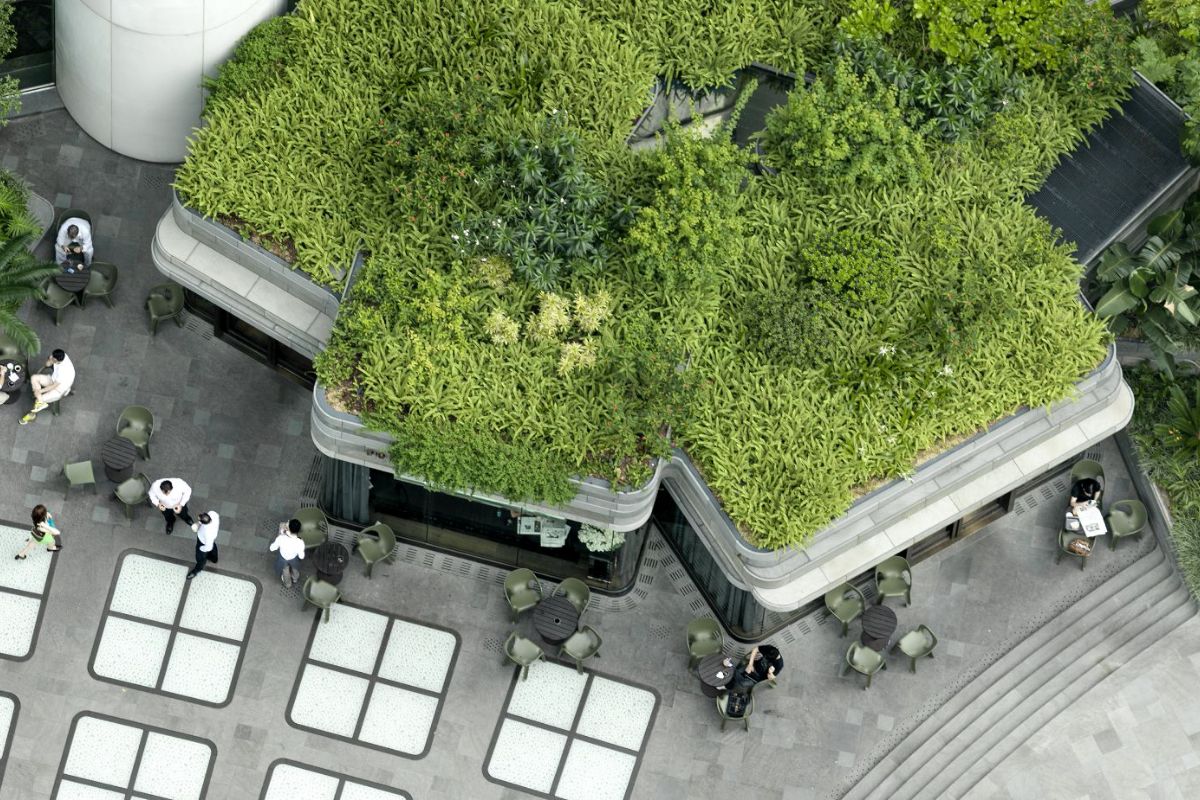
A recently-concluded pilot project for an innovative water treatment system in the cooling towers at Citygate aimed to reduce both fresh water and energy consumption. This two-year project ended in 2025 and the results show the pilot was a success: Water usage intensity improved by 8.8%, indicating a more efficient heat exchange with reduced water consumption. This improvement translates to an estimated annual water savings of approximately 1,800 m³.
Harvesting and Reusing Rain Water
Sanya Rain Catcher Tower
Sanya Rain Catcher Tower
We developed a unique rainwater harvesting and recycling system at Taikoo Li Sanya – a “rain catcher” tower. Designed with concealed gutters and pipes that channel rainwater from the roof and vertical surfaces into storage tanks, the tower collects rainwater that is then repurposed for non-potable uses – irrigating green spaces, toilet flushing and other functions. This significantly reduced the project’s use of potable water.
Rainwater Recycling at Savyavasa
Rainwater Recycling at Savyavasa
Heavy rain is a frequent occurrence in Jakarta. At our Savyavasa residential development, the rainwater retention and harvesting system also acts as a flood control measure. By collecting and storing rainwater, the system also reduces and controls the volume of rainwater entering storm drains and local waterways, helping to minimise flooding incidents. It helps stop floodwater entering the surrounding community, lowers water bills by providing irrigation water and enhances quality of life for residents by promoting responsible water management.
Condensate Recovery System at Lujiazui Taikoo Yuan
Condensate Recovery System at Lujiazui Taikoo Yuan
A condensed water recovery system at the development effectively captures and reuses condensate from the air conditioning system’s air handling units to reduce potable water consumption by the cooling tower. The system collects high-quality condensate water, which is then treated and piped to supplement cooling tower water requirements. This closed-loop approach lowers the project’s overall water footprint, reducing municipal water consumption by approximately 1,296 tonnes per year.
SEE MORE IN