Increasing Climate Resilience in New Projects
Swire Properties has significant investment plans for new projects in the Chinese Mainland and Hong Kong. It is therefore of the utmost importance to expand our climate risk assessment work to cover new project sites. This will allow us to critically evaluate the potential climate exposure of these developments and take early strategic action to incorporate climate resilience into the projects’ design and planning stages.
In 2023, responding to increased climate-related physical risks from flooding and other extreme weather events, we conducted two pre-assessments of our projects in Xi’an and Sanya, Hainan Island to ensure that climate adaptation and resilience are designed into these developments. In 2024, we performed deep-dive climate risk hazard modelling associated with the five Shared Socio-economic Pathways (SSPs) scenarios (SSP1-1.9, SSP1-2.6, SSP2-4.5, SSP3-7.0, and SSP5-8.5) used by the Intergovernmental Panel on Climate Change’s (“IPCC”) Sixth Assessment Report, also known as “AR6”. These scenarios range from the immediate term to the distant future, namely, 2030, 2050, 2080, and 2100. We then integrated resilience design into these projects based on projected climate variables, including extreme heat, extreme precipitation, sea level rises, flood depth, and extreme wind speeds.
The types of hazard models we used included urban drainage modelling, riverine modelling, coastal hydrodynamic modelling, and intensified typhoon assessments. Our climate design approach is intended to be flexible and adaptive enough so that the designs can be changed or upgraded according to fluctuating climate conditions or impacts that differ from projections.
As an example, design solutions for two of the major variables include:
Heat stress:
- Incorporating passive design strategies.
- Designing air-conditioning systems based on projected outdoor design temperatures under various climate scenarios.
- Selecting construction materials that cater to extreme heat and cold.
Flooding:
- Determining design flood elevation based on projected flood depths.
- Incorporating sponge city strategies, nature-based solutions and designing blue-green infrastructure and water detention facilities such as appropriate landscaping, rain gardens, rainwater tanks and sump pump systems.
Our work to increase climate resilience in this projects continued in 2025 [add any relevant updates.]
Taikoo Li Xi’an
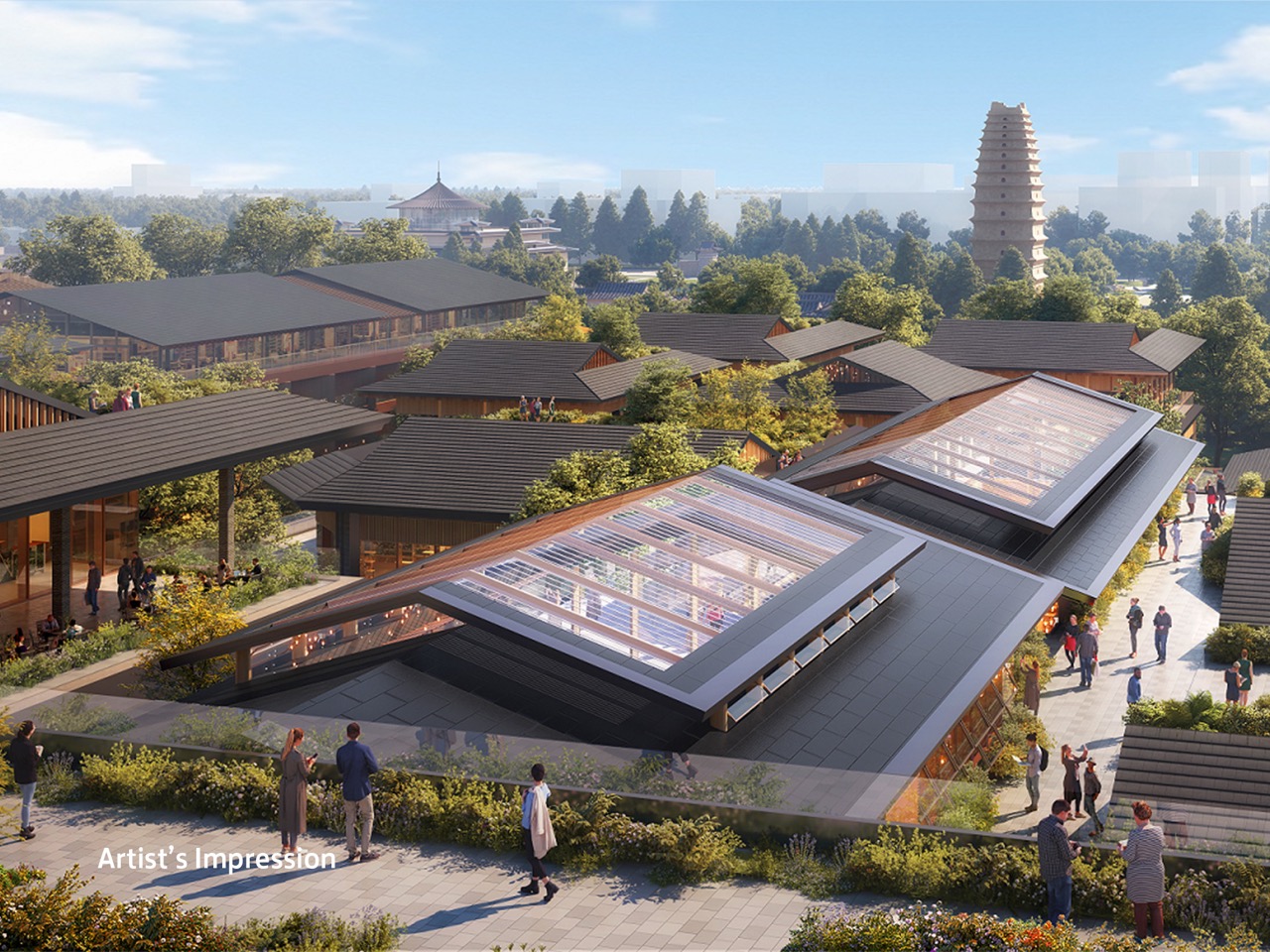
Taikoo Li Xi’an
Conducted detailed calculations and a design review for the sunken garden, one timber structure roof and one concrete roof to determine the required height of the roof slope and number of overflows needed due to prepare for extreme rainfall for the project site.
Sanya Project
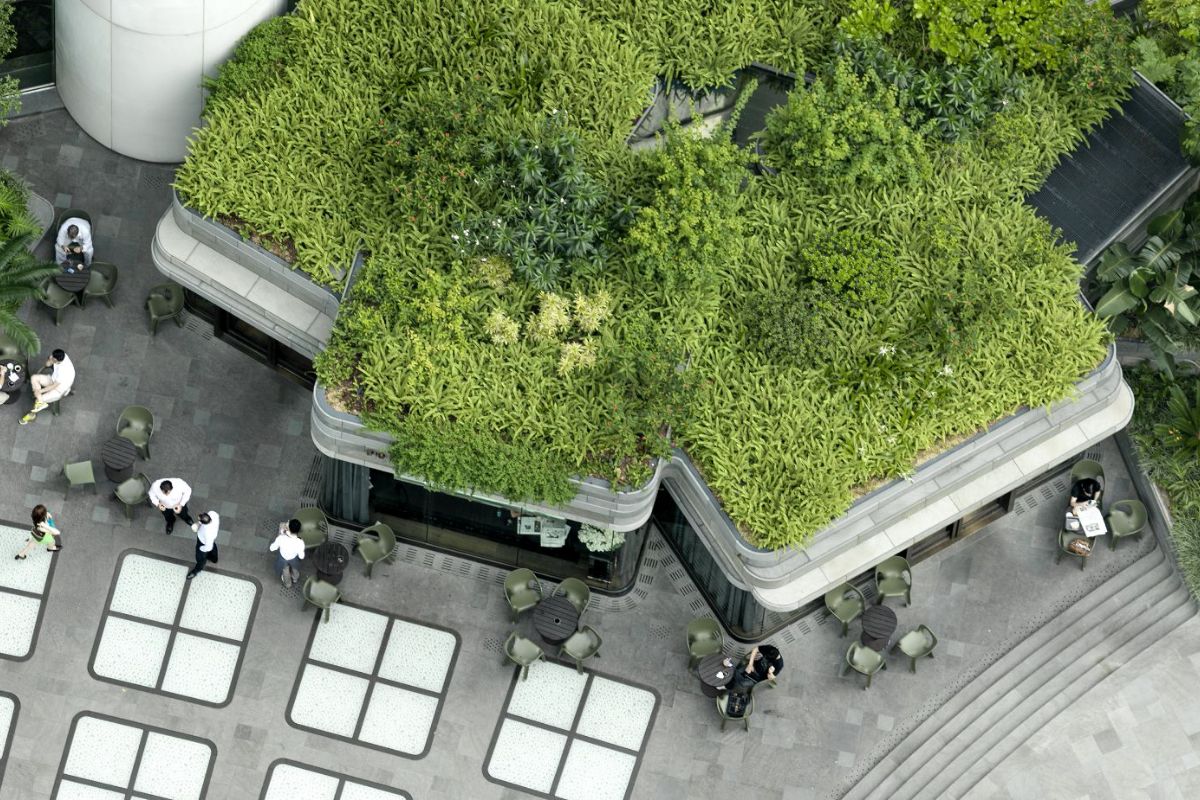
Sanya Project
Taikoo Li Julong Wan
Taikoo Li Julong Wan
Swire Properties’ new Taikoo Li Julong Wan project is located in Guangzhou and is therefore exposed to high temperatures and heavy rainfall, especially in the summer months. Swire Properties’ FMSD, architects and MEP consultants collaborated to introduce several climate resilience measures for the property.
- The lowest building site level was set above the 200-year flood level.
- Flood barriers are set up at all basement entrances.
- Sump pumps are installed in all sunken plazas to pump out flood waters during extreme rainfall events.
- To address high temperatures, all chiller plants are sized to ensure human comfort under 2050 weather condition simulations
- All chiller plants are high efficiency, with equipment, operational and AI-assisted self-learning control systems producing energy use intensity (“EUI”) figures of up to EER5.0-5.5.
SEE MORE IN